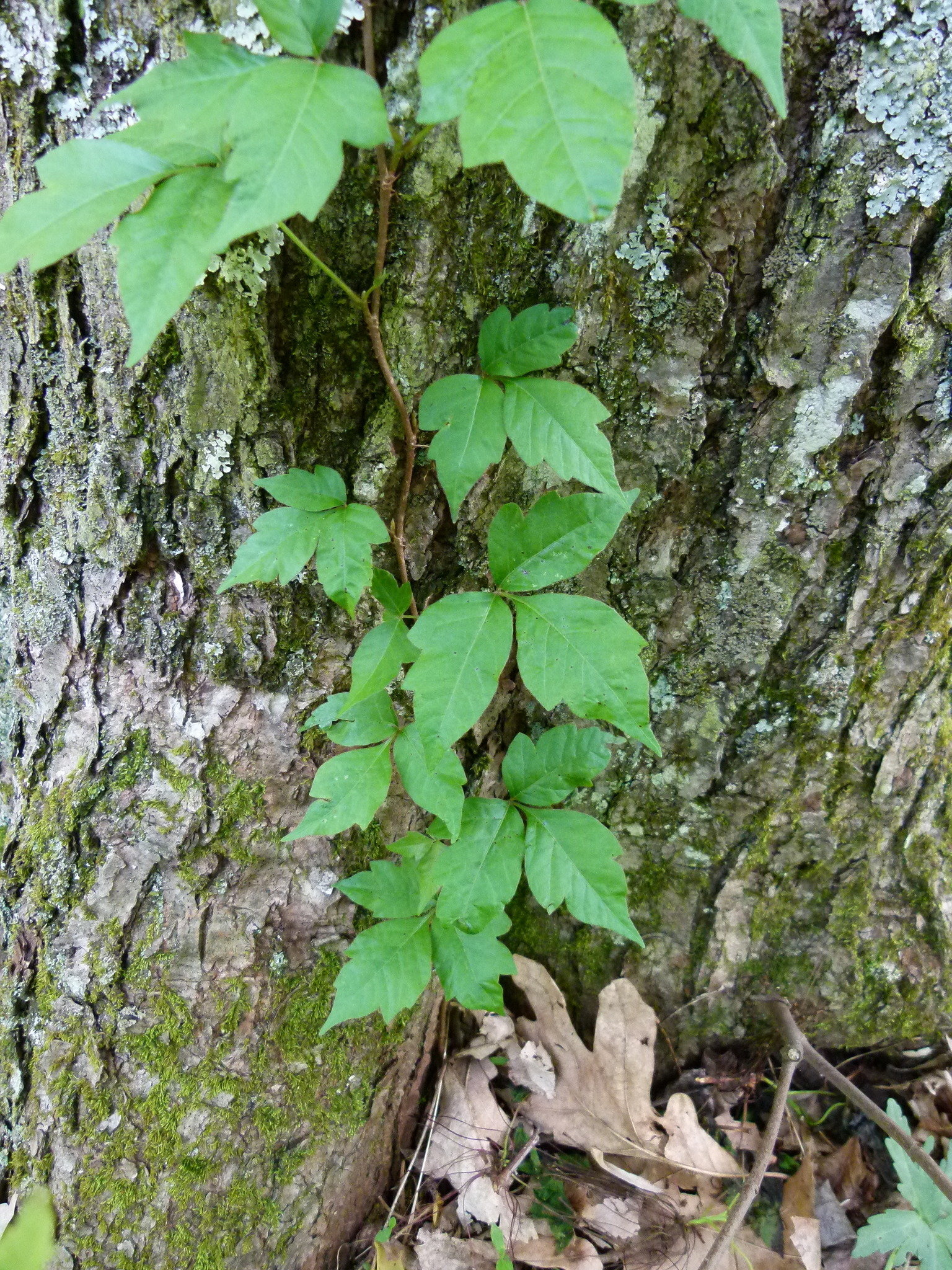

Photographer & Copyright

© botanygirl (iNaturalist)

Photo Source

CC BY 4.0

Inclusion in Plant ID / Comparison Guides

This photo is featured in 5 plant ID/comparison guides:

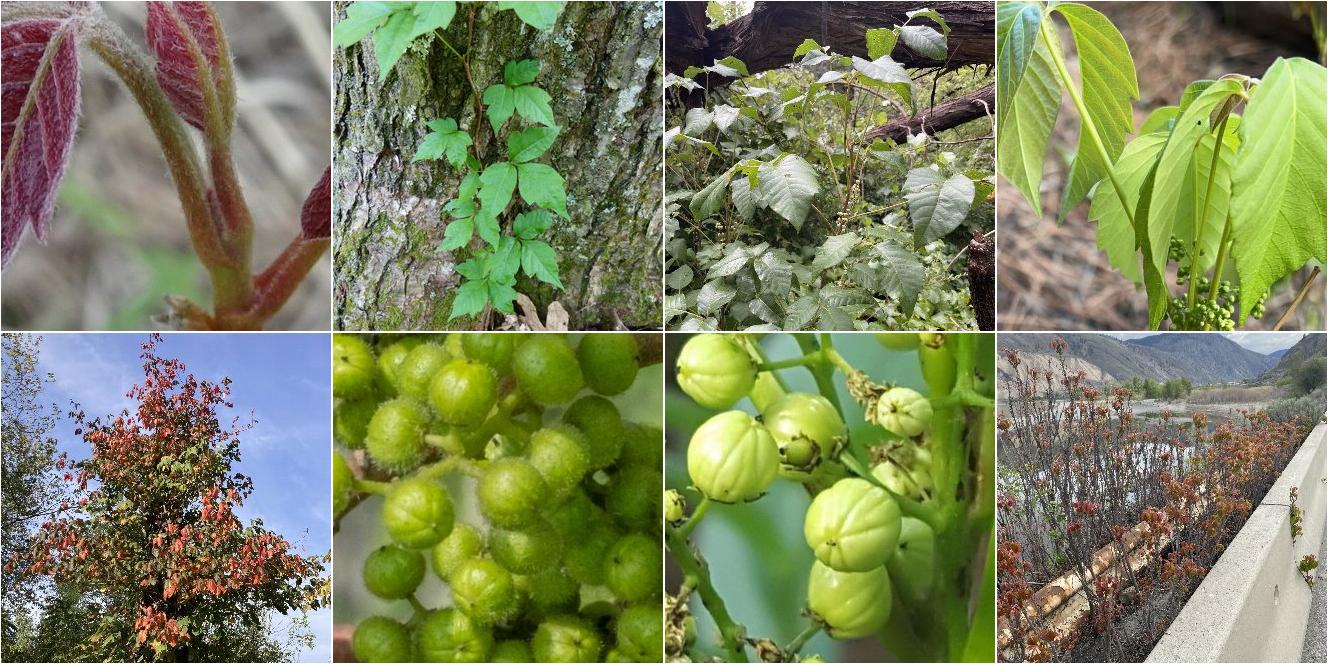
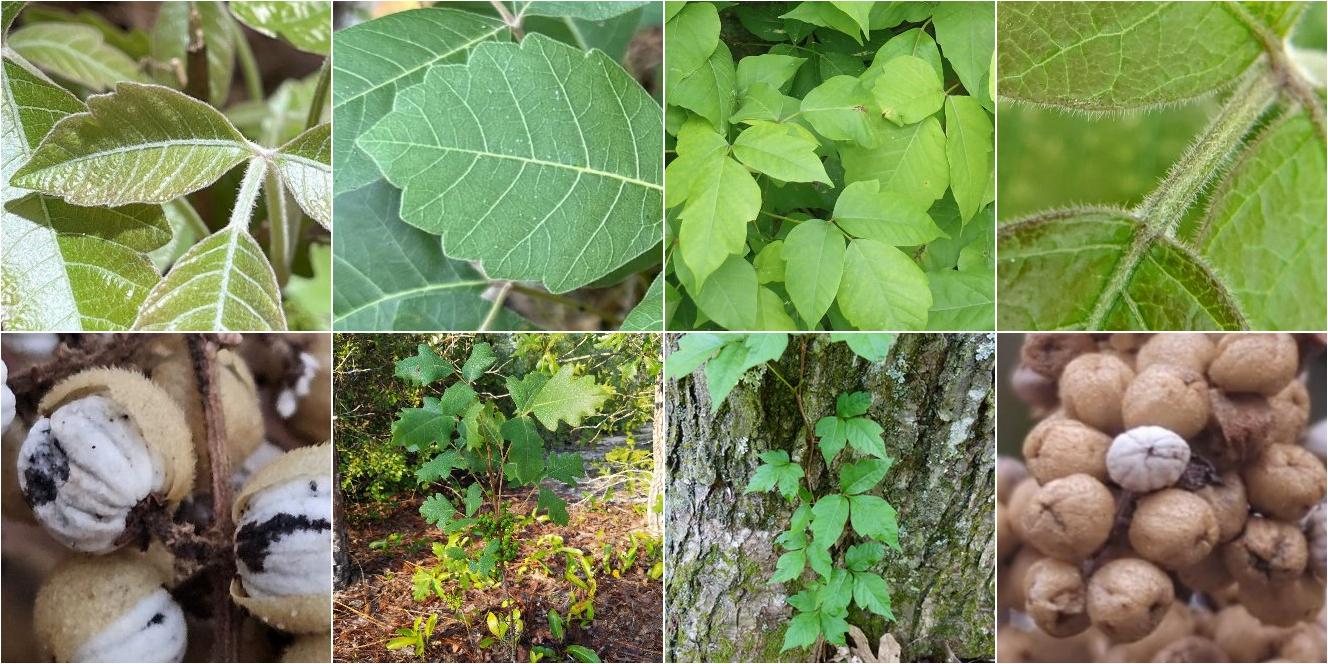
collage of Eastern Poison Ivy and Western Poison Ivy

Eastern Poison Ivy (Toxicodendron radicans) vs. Western Poison Ivy (Toxicodendron rydbergii)

Updated June 3rd, 2026

These two species are visually similar and have significant range overlap in eastern Canada and the north and central US. Vining plants or ones with aerial rootlets are easily identified as T. radicans, which averages hairier and with slightly larger fruit. T. radicans ranges farther southeast, to lower elevations, and into shadier habitats, and is found in a wide range of moisture conditions and soil pH. T. rydbergii ranges farther west and north, is more restricted to higher elevations and open habitats. In the overlap zone, T. rydbergii prefers rocky, usually acidic soils and drier conditions, although deeper in the arid west it is restricted to richer soil in ravines and canyons.
View Full Guide

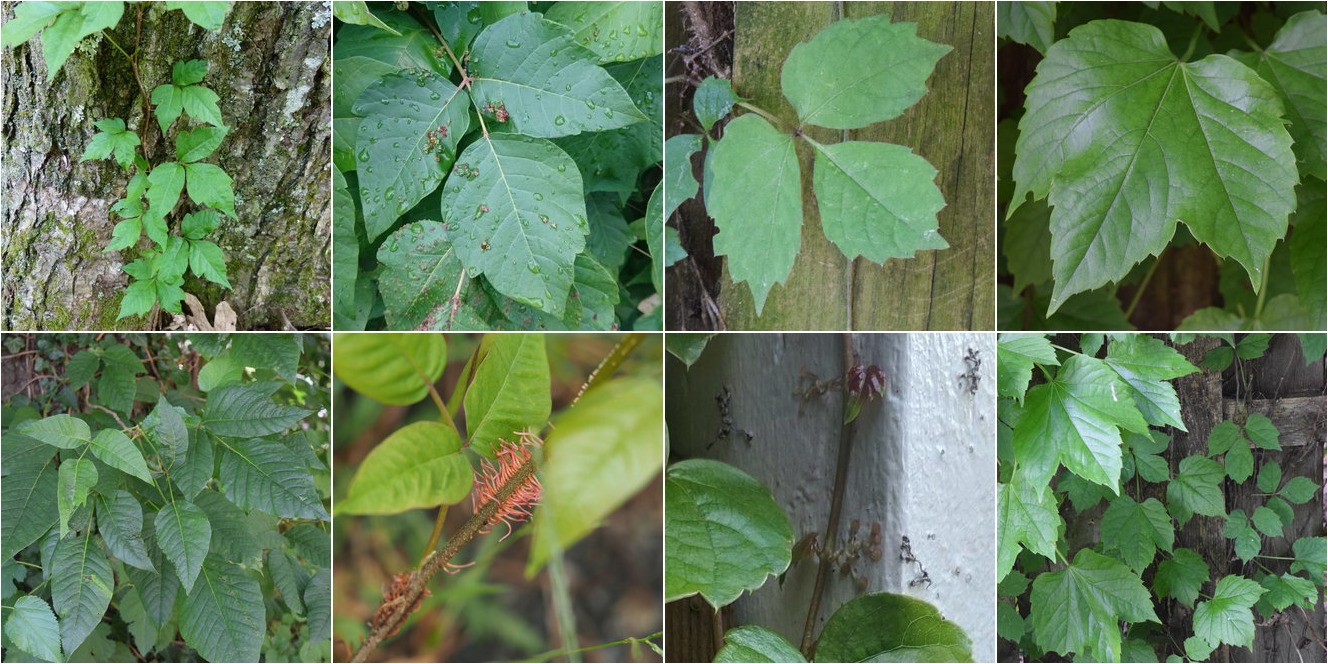
collage of Southeastern Poison Oak and Eastern Poison Ivy

Southeastern Poison Oak (Toxicodendron pubescens) vs. Eastern Poison Ivy (Toxicodendron radicans)

Updated June 2nd, 2026

These species are visually similar and both have highly variable leaf shapes. The range of T. radicans contains nearly the entire range of T. pubescens. They can usually be easily distinguished by differences in growth habit and leaf shape. T. radicans ranges farther north and west, tolerates greater shade, and ranges into moister habitats with richer soil, and is common and abundant in much of its range. T. pubescens is more tolerant of dry, rocky or sandy soils and is more restricted these habitats, and is less abundant in much of its range.

View Full Guide

collage of Eastern Poison Ivy and Japanese Creeper

Eastern Poison Ivy (Toxicodendron radicans) vs. Japanese Creeper (Parthenocissus tricuspidata)

Updated December 29th, 2019

These plants are often confused when young as both can have three leaflets and a vining growth habit. Older plants are usually easy to distinguish, and any plants can be told apart by climbing method and details of leaf shape.

View Full Guide

The other guide is not yet completed and published.