
White Rattlesnakeroot (Nabalus albus) vs Tall Rattlesnakeroot (Nabalus altissimus)
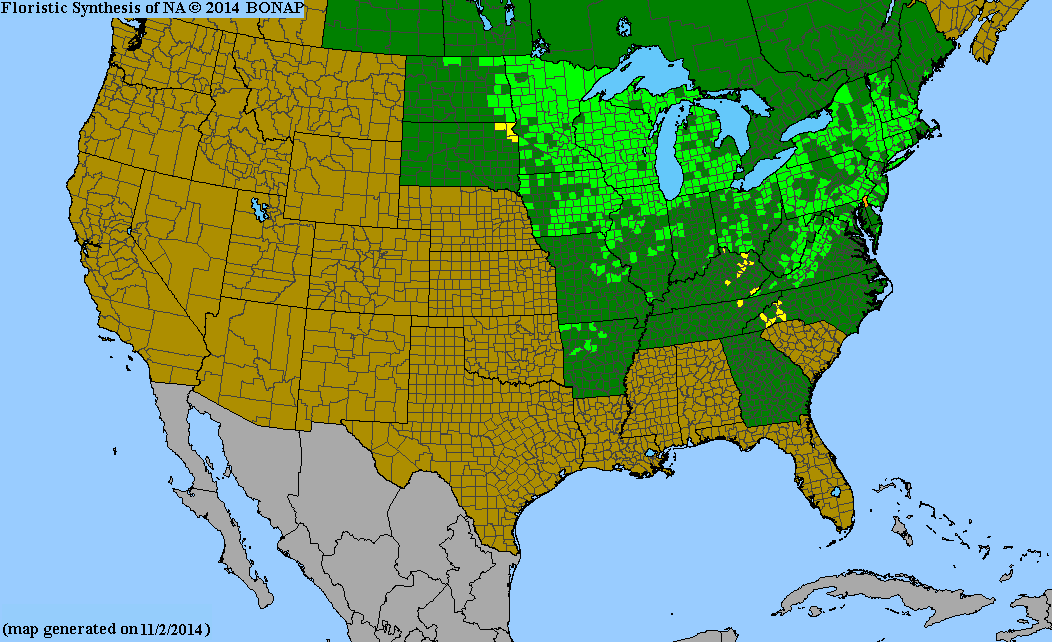
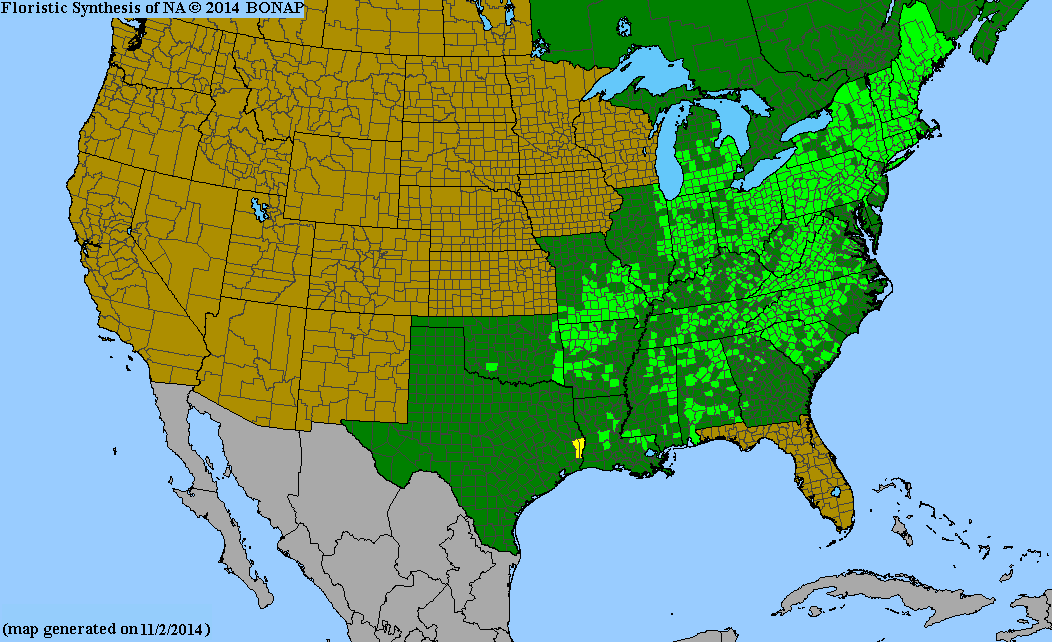
This guide is under construction and has not been published yet. It may have errors. When in doubt, double-check other sources for definitive ID.These species are sometimes confused, especially when plants are not flowering. They can be distinguished by floret count, flower color, pappus color, and leaf characteristics. N. albus ranges much farther northwest, and prefers high-pH soils. N. altissimus ranges much farther southwest, south, and northeast and prefers nutrient-rich loamy soils.
White Rattlesnakeroot (Nabalus albus) | Tall Rattlesnakeroot (Nabalus altissimus) |
Thought to be a monocarpic perennial, native to forests in northeastern North America, usually in high-pH soils. | Thought to be a monocarpic perennial, found in well-drained sites in forests, native to Eastern North America. |
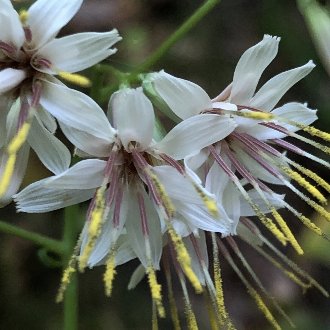 Flowerheads usually have have 7-9 florets, rarely as many as 13. Corollas are white to pale pink. Photo © Christopher Zacharias, CC BY 4.0. | 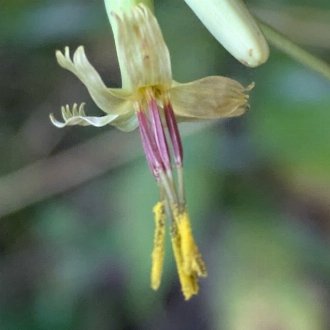 Flowerheads usually have 5 florets, rarely 4 or 6. Corollas are pale yellow. Photo © Chris Angell, CC BY 4.0. |
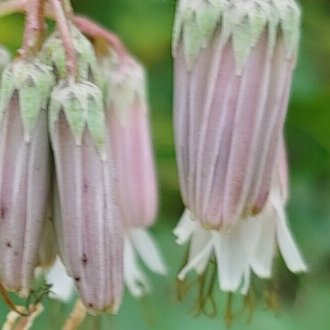 Flowerheads usually have 8 phyllaries (bracts enclosing each flowerhead), rarely 7 or 9. Phyllaries are purplish to maroon. Involucres (cluster of all bracts) are wider (3-5mm diameter.) Photo © Ryan Sorrells, CC BY 4.0. | 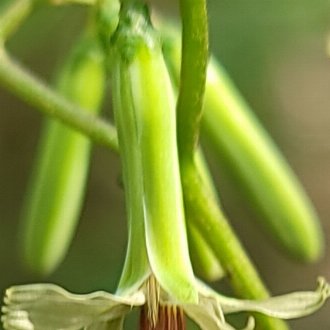 Flowerheads usually have 5 phyllaries, rarely 4 or 6. Often as few as 2 are visible at once from a side photograph. Phyllaries are pale green. Involucres are narrower (2-3mm diameter.) Photo © John Brown, Public Domain. |
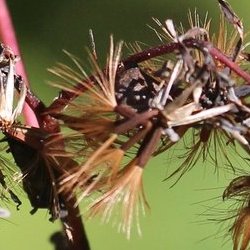 Pappi (wispy parts attached to seeds) are usually reddish-brown to rusty, only rarely yellowish. Photo © Rob Foster, CC BY 4.0. | 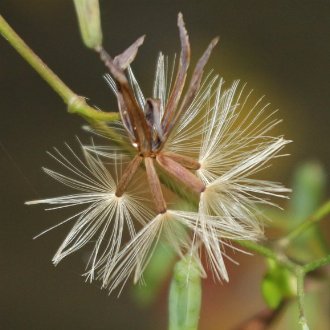 Pappi are usually whitish to pale yellow. Photo © Quinten Wiegersma, CC BY 4.0. |
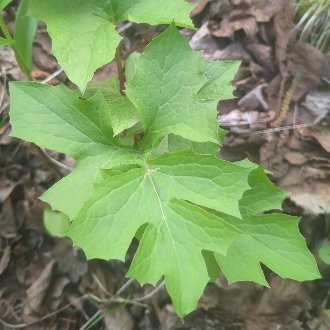 Basal leaves are more consistently serrated and tend to have coarser or deeper teeth or serrations along the leaf margins. Because of the deeper serrations, there can be less of a clear distinction between lobes and teeth on some leaves. Photo © Dominique Menard, CC BY 4.0. | 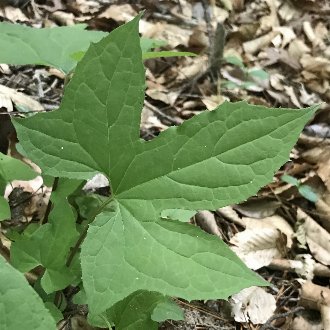 Basal leaves may be lobed but have less pronounced serrations.When they are serrated at all, they tend to have shallower serrations along the leaf margins. Lobes and teeth are clearly differentiated on most leaves, with lobes much deeper than teeth. Photo © Laura Clark, CC BY 4.0. |
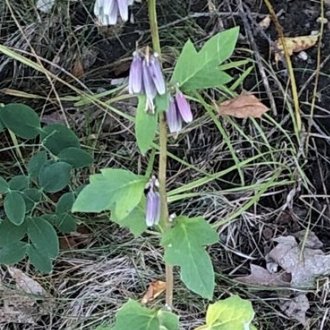 Leaves higher on the stem are reduced in size, and may have reduced lobing, but are often still lobed. Photo © Bob, CC BY 4.0. | 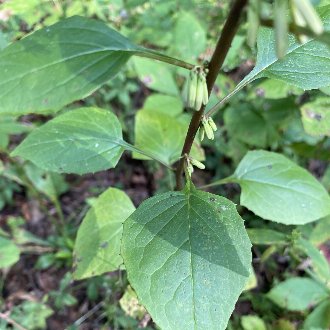 Leaves higher up on the stem have greatly reduced lobing and are usually unlobed. Photo © Bonnie Semmling, CC BY 4.0. |
References & External Resources
These short lists show only links helpful for ID. For a complete list of references and resources also covering other aspects of ecology, visit the links section of the full article on each plant, which is the first entry here.