
Tall Rattlesnakeroot (Nabalus altissimus) vs Three-leaved Rattlesnake Root (Nabalus trifoliolatus)
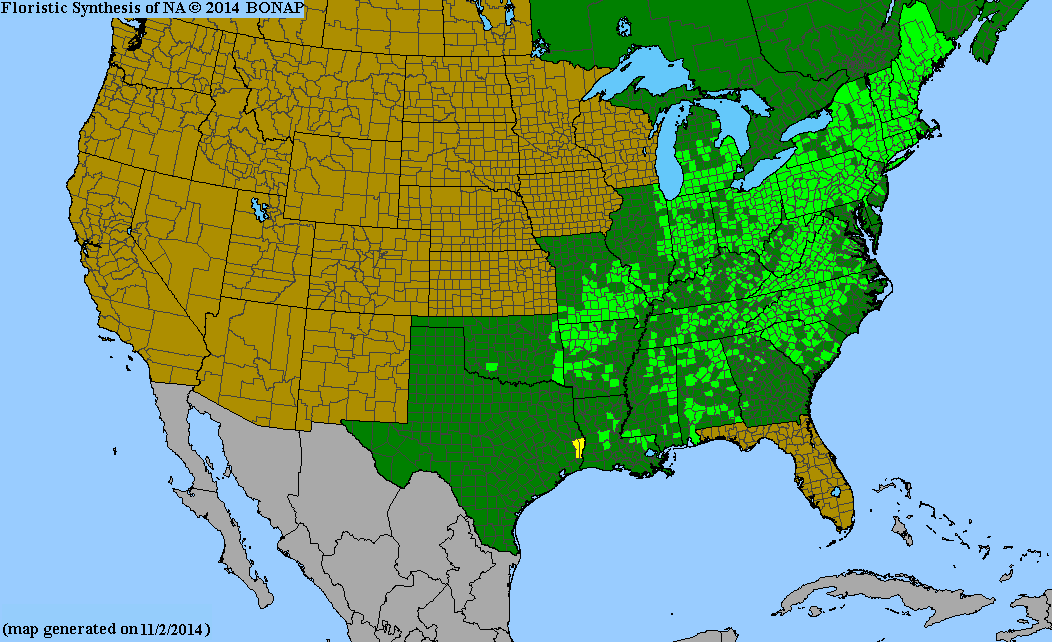
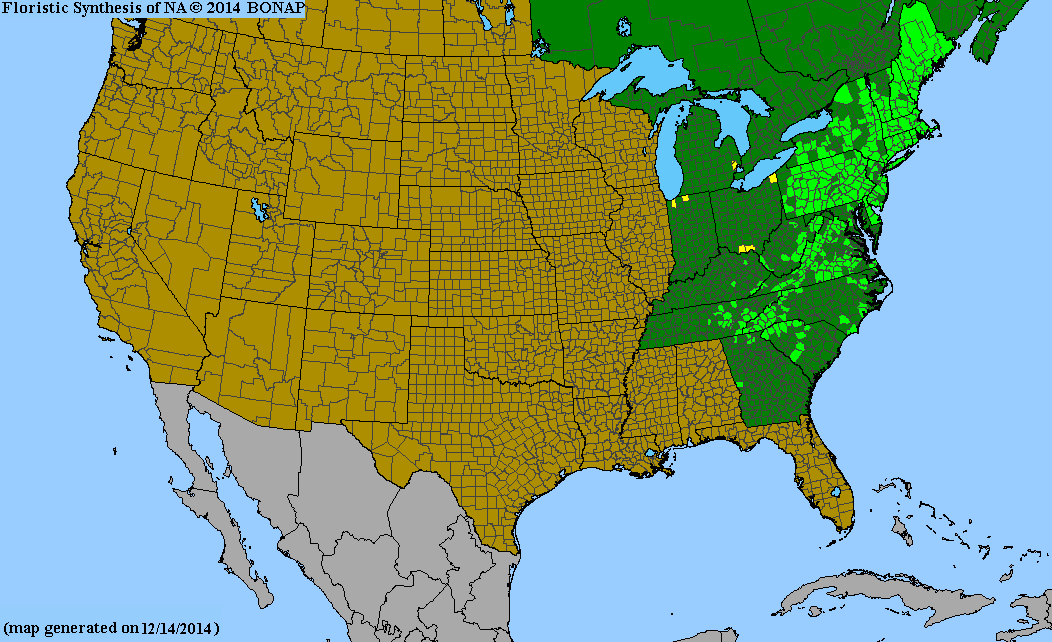
These two species are visually similar and frequently confused. They can be distinguished by flowers, lower leaf shape, and with some effort, by seeds. N. altissimus ranges much farther west, farther north, and slightly farther south, and prefers richer, shadier habitats. N. trifoliatus extends farther east (closer to the coast) in the central portions of its range, prefers sunnier habitats and tolerates more soil acidity and some salinity.
Tall Rattlesnakeroot (Nabalus altissimus) | Three-leaved Rattlesnake Root (Nabalus trifoliolatus) |
Thought to be a monocarpic perennial, found in well-drained sites in forests, native to Eastern North America. | Thought to be a monocarpic perennial, native to forests and rock outcroppings in eastern North America, usually on acidic soils. |
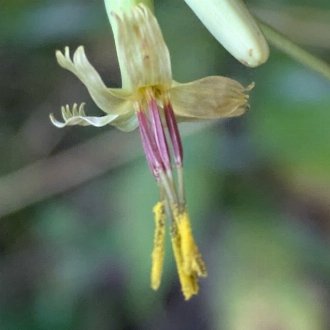 Flowerheads usually have 4-6 florets. Photo © Chris Angell, CC BY 4.0. | 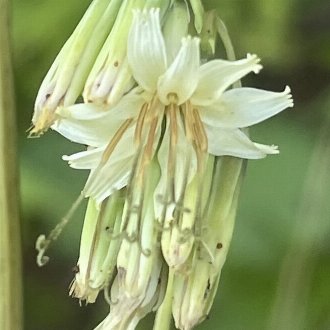 Flowerheads usually have 8-15 florets. Photo © Ingolf Askevold, Public Domain. |
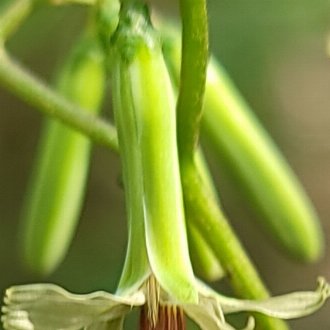 Flowerheads usually have 4-6 phyllaries (bracts or leaf-like structures enclosing each flowerhead.) Phyllaries may have small blackish areas at both base and tip, but are more consistently pale green, with less color variation from base to tip. Involucre (cluster of all bracts) is narrower and often as few as 2 bracts are visible from the side. Photo © John Brown, Public Domain. | 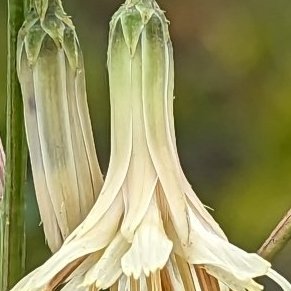 Flowerheads usually have 7–10 phyllaries. Phyllaries are often darker green to blackish at the base, and fade to paler at their tips. Involucre is wider and often as many as 4 or more bracts are visible from the side. Photo © agbelliveau, Public Domain. |
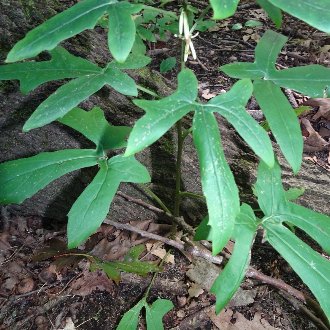 Lower leaves may be 3-lobed, sometimes deeply, but are rarely subdivided into leaflets. Photo © Thomas Koffel, CC BY 4.0. | 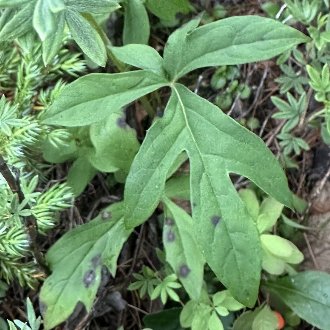 Lower leaves may be 3-5-lobed, and are often subdivided into leaflets. Photo © Cassidy Best, CC BY 4.0. |
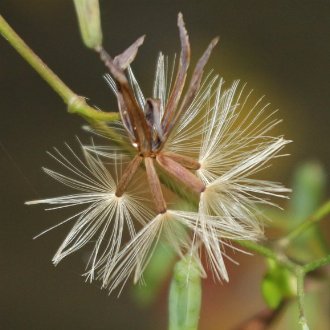 Pappi (wispy parts attached to the seeds) are slightly shorter (5-6mm) and may be pale yellow, but usually tend more towards whitish. Photo © Quinten Wiegersma, CC BY 4.0. | 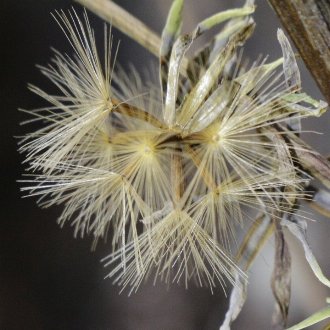 Pappi are slightly longer (7-9mm) and are more consistently pale yellow. Photo © Charlie O'Brien, Public Domain. |
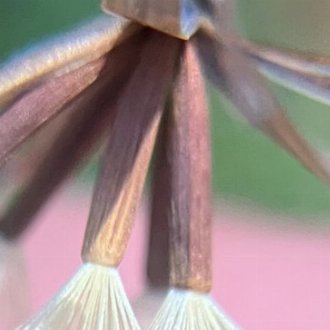 Seeds have 5-10 ridges, but ridges are less distinct. Photo © Charlie O'Brien, Public Domain. | 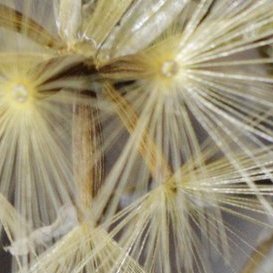 Seeds have 8-11 ridges, and ridges are more distinct. Photo © Charlie O'Brien, Public Domain. |
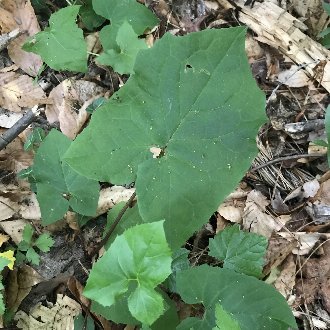 Basal leaves average fuller, with more surface area. They may have 3 lobes but are often unlobed, and when present, lobes are usually shallower. Basal leaves often have hastate bases (like an arrowhead.) Photo © Laura Clark, CC BY 4.0. | 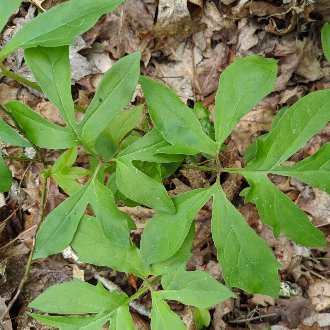 Basal leaves are deeply 3-5-lobed and often subdivided into leaflets, and tend to have less total surface area. Photo © Fives, CC BY 4.0. |
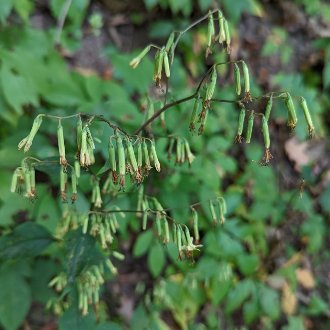 Inflorescences average slightly more panicle-like, with more branches, many of which themselves also branch. Branches are more likely to be horizontal. Photo © Skyler Principe, CC BY 4.0. | 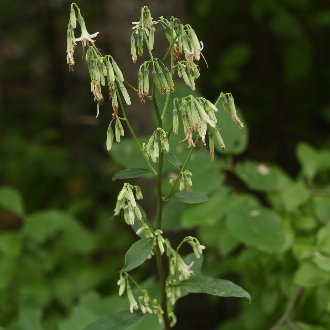 Inflorescences may be panicle-like but average slightly more raceme-like, with long branches that are themselves less branched. Branches are more likely to be mostly-vertical. Photo © Alexis Tinker-Tsavalas, CC BY 4.0. |
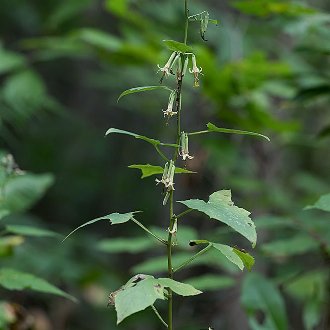 Usually found in forests. Prefers shadier, more sheltered habitats. Needs deeper, more well-developed soil and only tolerates moderate soil acidity. Photo © crgillette, CC BY 4.0. | 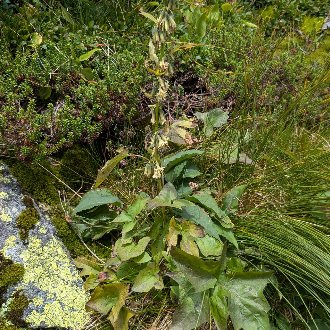 Ranges into sunnier, more barren habitats and tolerates acidic soil and thinner soil; often found on rock outcroppings. Also tolerates salt spray and occurs in coastal habitats. Photo © Kristof Zyskowski, CC BY 4.0. |
Additional Notes
Although both of these species have highly variable leaf shapes, there is little overlap in the shape of basal leaves between these two species. However, basal leaves of either species can be confused with numerous other Nabalus species, so it may be necessary to check against other possible Nabalus species, including white rattlesnakeroot (Nabalus albus) and lion's foot rattlesnake root (Nabalus serpentaria). The broader, fuller leaves of N. altissimus reflect adaptation to greater shade whereas the smaller, more subdivided leaves of N. trifoliolatus reflect adaptation to greater drought stress.Although there are pronounced average differences in inflorescence shape between these two species, this trait alone is not reliable for ID. Occasionally, N. altissimus can have a single, unbranched vertical inflorescence, and N. trifoliolatus can sometimes have a many-branched inflorescence with horizontal branches.
References & External Resources
These short lists show only links helpful for ID. For a complete list of references and resources also covering other aspects of ecology, visit the links section of the full article on each plant, which is the first entry here.