
Woodland Lettuce (Lactuca floridana) vs American Wild Lettuce (Lactuca canadensis)
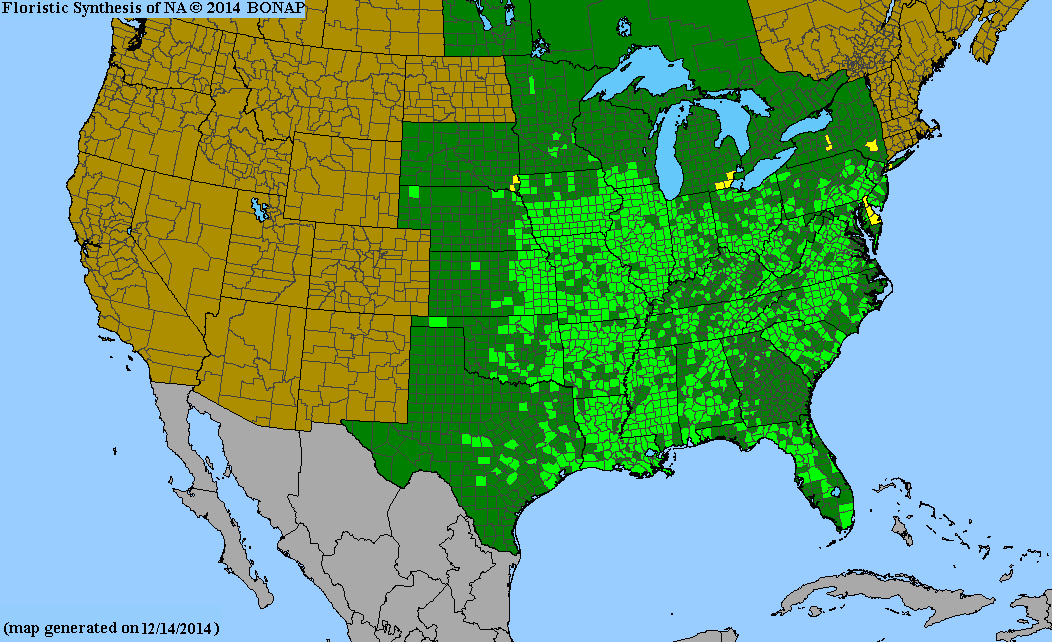
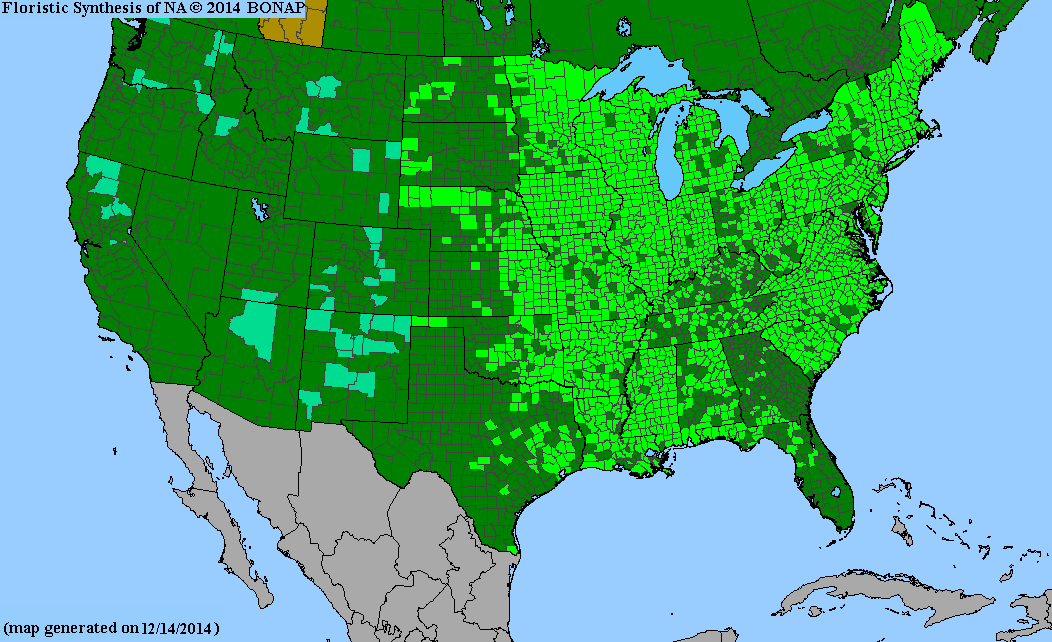
This guide is under construction and has not been published yet. It may have errors. When in doubt, double-check other sources for definitive ID.These two tall, native lettuces can sometimes be confused. They are easy to tell apart by flowers, and they have numerous other differences as well. L. floridana ranges slightly farther south and tolerates considerably more shade, whereas L. canadensis ranges much farther north and west, and favors sunnier habitats.
Woodland Lettuce (Lactuca floridana) | American Wild Lettuce (Lactuca canadensis) |
A tall biennial native to the southeastern to central US. | A tall biennial native to eastern North America, having expanded its range westward as well. |
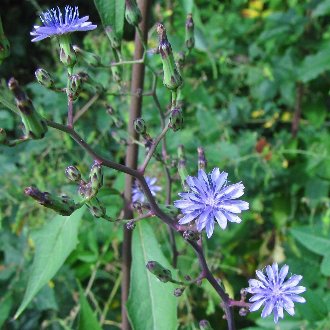 Flowerheads are usually bluish, rarely whitish, and much larger. Photo © Ken Kneidel, Public Domain. | 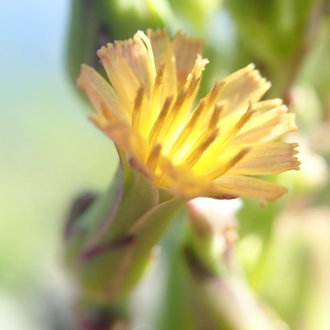 Flowerheads are usually yellow, rarely whiteish, and much smaller. Photo © Laura Costello, CC BY 4.0. |
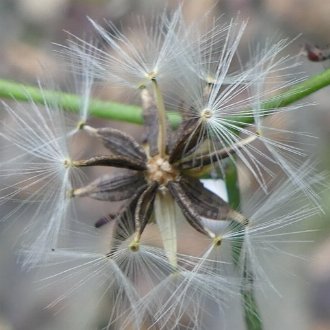 Seeds are separated from the pappus (wispy part) only by a short, stout beak. Photo © botanygirl, CC BY 4.0. | 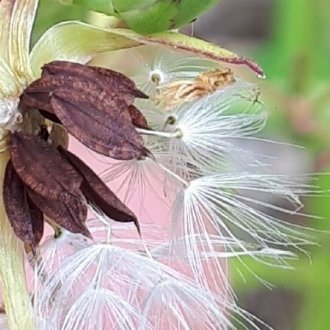 Seeds are separated from the pappus by a long, narrow beak. Photo © Jennifer Aitkens, CC BY 4.0. |
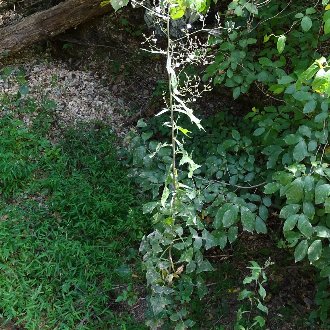 Found in shadier habitats, often in small gaps in forests where there is only dappled sunlight or briefer periods of direct sunlight. Leaves tend to extend farther up the stem. Photo © Samantha Heller, CC BY 4.0. | 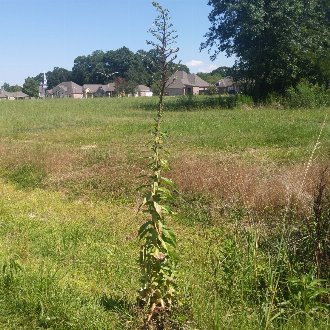 Found in sunnier habitats, often in full sun or partial sun with several hours of direct sunlight. Leaves tend not to extend quite as far up the stem. Photo © Mike Tilley, CC BY 4.0. |
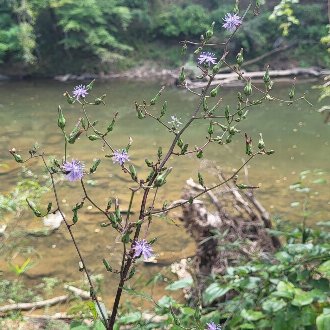 Inflorescences average slightly sparser and more spreading. Photo © Jeff Wilson, CC BY 4.0. | 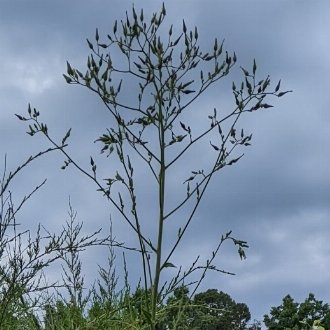 Inflorescences average slightly denser and more compact. Photo © Alison Northup, CC BY 4.0. |
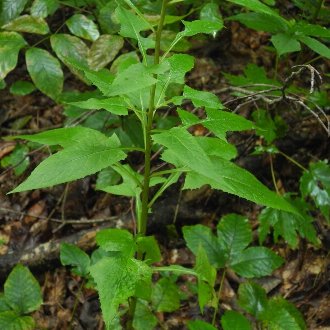 Photo © mjpapay, CC BY 4.0. | 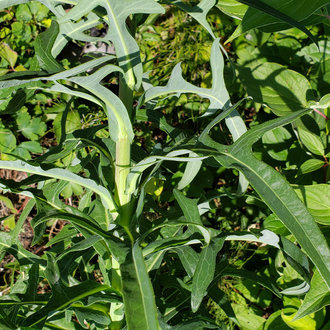 Photo © aarongunnar, CC BY 4.0. |
Additional Notes
FNA's reported maximum heights for these species give the impression that L. canadensis is the taller of the two species and L. floridana shorter. However, we have found individuals of L. floridana considerably taller than the rare max height given (200cm) in FNA, and furthermore, we have found individuals of L. floridana growing near individuals of L. canadensis where the L. floridana plants are by far the taller of the two. We thus have found height unreliable for distinguishing them, even if on average, L. canadensis is taller.References & External Resources
These short lists show only links helpful for ID. For a complete list of references and resources also covering other aspects of ecology, visit the links section of the full article on each plant, which is the first entry here.