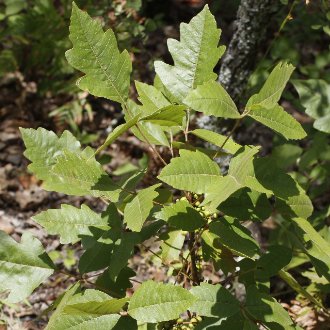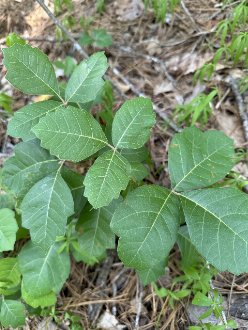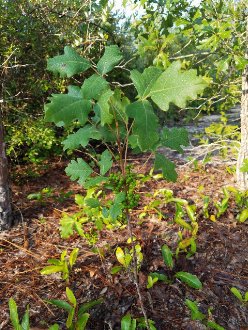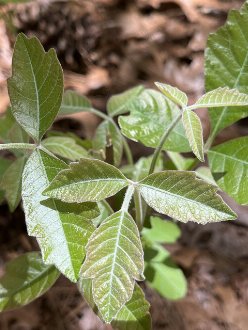


Southeastern Poison Oak (Toxicodendron pubescens Mill.)
Also known as eastern poison oak, Atlantic poison oak.
↑Summary
A low-growing, rhizomatous shrub favoring dry, infertile soils, native to the southeastern to south-central US.
↑Similar Plants
↑Habitat
Atlantic Poison Oak is found in a variety of dry upland habitats with poor soils.
It tolerates both alkaline and acidic soils, occurring in acidic sands such as inland sandhills as well as coastal sand dunes, as well as on limestone outcroppings and other higher-pH rock outcroppings.
↑Notes
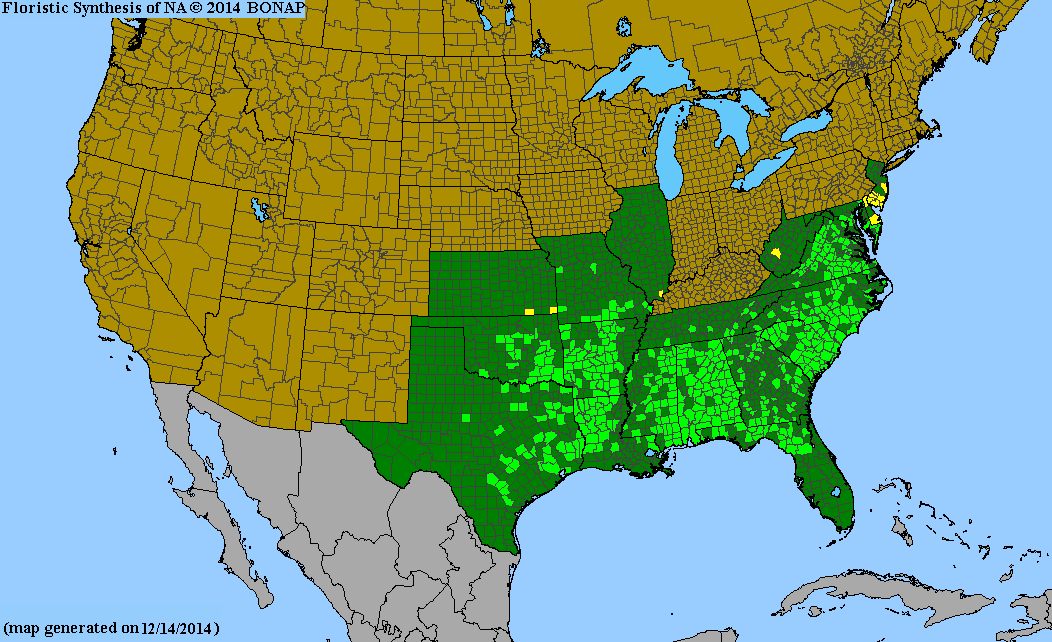
We prefer the common name "southeastern poison oak" because it more accurately communicates this species' range in North America; "eastern poison oak" conveys some, but less information, and "Atlantic poison oak" is misleading as this species only proceeds up the Atlantic coast about to New Jersey, but is found well inland into Oklahoma and Arkansas.
↑Links & External Resources
• Atlantic Poison-Oak | Fire Effects Information System (FEIS) (About This Site)
• Toxicodendron pubescens (Atlantic Poison Oak) | USDA PLANTS Database (About This Site)
• Poison-Oak | Virginia Tech Dendrology Factsheets (About This Site)
• Toxicodendron pubescens | Biota of North America Project (BONAP) (About This Site)
• Toxicodendron pubescens | NatureServe Explorer (About This Site)
• Toxicodendron pubescens | Missouri Plants (About This Site)
• Atlantic Poison Oak | Maryland Biodiversity Project (About This Site)
• Toxicodendron pubescens P.Miller (Poison Oak) | Digital Atlas of the Virginia Flora (About This Site)
• Toxicodendron pubescens Mill. | Plants of the World Online (POWO) (About This Site)
↑Photo gallery