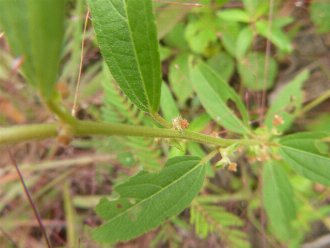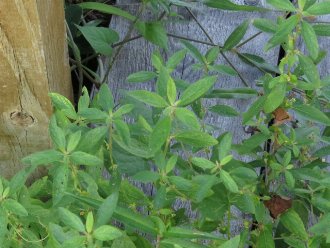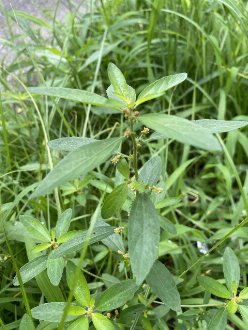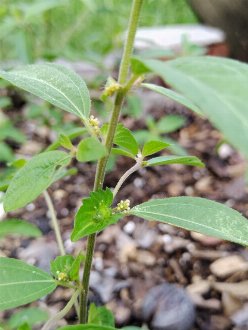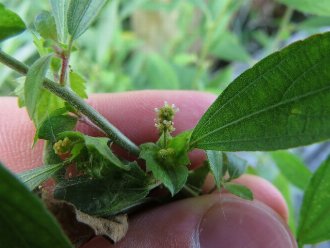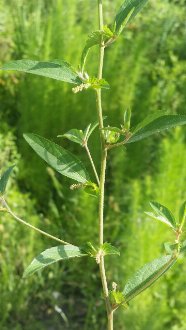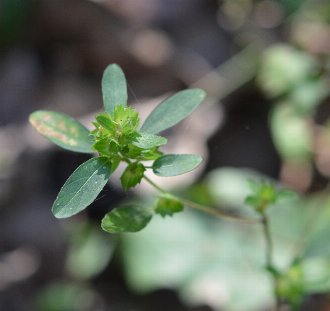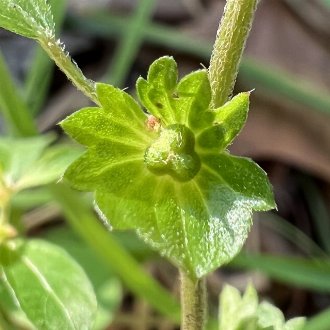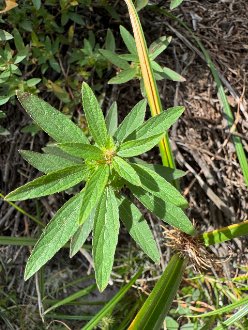

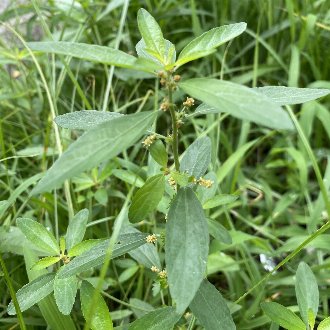
Slender Threeseed Mercury (Acalypha gracilens A. Gray)
Also known as slender copperleaf, slender mercury, shortstalk copperleaf.
↑Summary
An annual native mostly to the southeastern US.
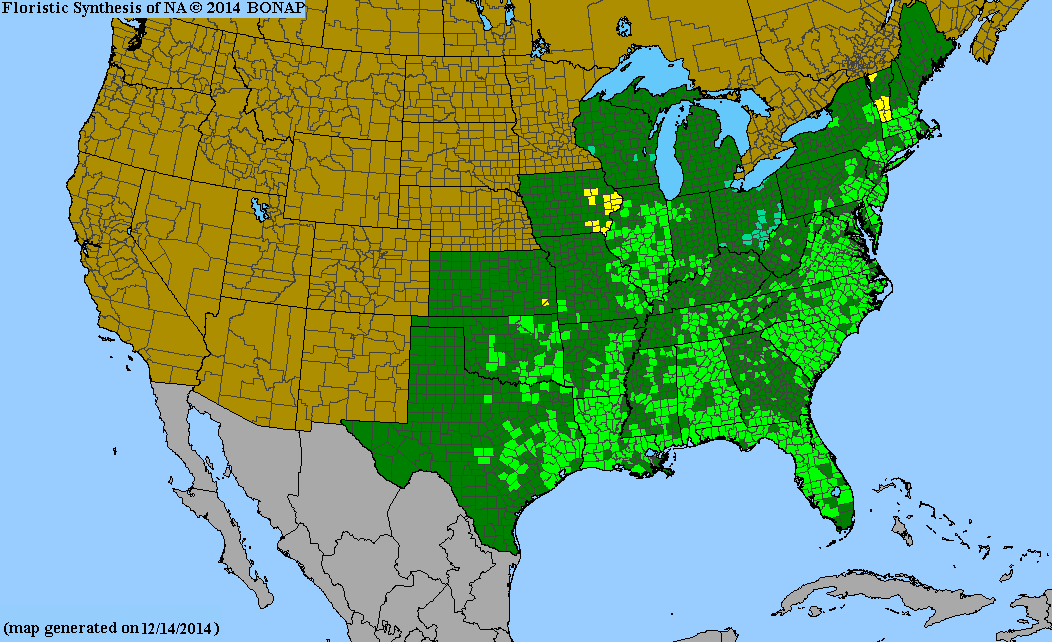
↑Range - Expand
| Legend | Color |
| Native | |
| Expanded or Not Present | |
| Native or Expanded | |
| Native or Not Present | |
| Expanded |
This map is based on our research. We have checked its accuracy to Level 3 ecoregions. Although this plant occurs somewhere in each of these regions, it may only occur in a small part of some or all of them.
This species has established north of its native range, moving into Ohio, Michigan, and Wisconsin. We marked it expanded even though there are gaps of several counties separating these new populations from native ones, because it has largely been spreading on its own and not being intentionally cultivated, and because these populations are relatively near its native range.
↑Similar Plants
↑Habitat
Acalypha gracilens is found in a variety of open, wooded habitats on sites that have been disturbed in late spring to early summer. Natural habitats include open woodlands. Anthropogenic habitats include cropland, clear-cut forests, roadsides, railroads, power line clearances, waste ground, suburban gardens, and anthropogenic forest edges.
It usually occurs in habitats where the growth of other vegetation is low and sparse. Although it can occur on many different soil textures, it is often more likely on rocky or sandy soil, or clay soil on slopes, where the soil conditions create drought stress, and in nutrient-poor soils which limit plant growth.
Relative to Acalypha rhomboidea and Acalypha gracilens, this species prefers higher-light conditions, has a greater tolerance of sandy soils, and a stronger preference for habitats that experience regular fire. It can occur in habitats that never experience fire, so long as the habitat remains open and there are sufficient soil disturbances to allow it to establish.
↑Life Cycle
This species is an annual. In most of its range, it dies down for the winter, but in southern Florida it can complete its life cycle opportunistically at any time of year.
More so than other Acalypha sp. this species establishes a deep, robust taproot, and has a lower total leaf surface area, enabling it to withstand hot, dry conditions. Its relatively lower investment in foliage makes it less able to compete with other vegetation.
↑Control
This plant has been recorded establishing in the wild in Mozambique; it may have invasive potential, but it has not widely established as an invasive plant yet. We recommend taking care not to introduce this plant to areas far outside its native range.
↑Links & External Resources
• Acalypha gracilens (Slender Threeseed Mercury) | USDA PLANTS Database (About This Site)
• Acalypha gracilens | Go Botany (About This Site)
• Acalypha gracilens | Biota of North America Project (BONAP) (About This Site)
• Acalypha gracilens | NatureServe Explorer (About This Site)
• Acalypha gracilens | Flora of North America (About This Site)
• Acalypha gracilens | Missouri Plants (About This Site)
• Slender Three-seeded Mercury | Maryland Biodiversity Project (About This Site)
• Acalypha gracilens A.Gray | Plants of the World Online (POWO) (About This Site)
• Acalypha gracilens Gray (Slender Three-seeded Mercury, Short-stalk Copperleaf) | Digital Atlas of the Virginia Flora (About This Site)
↑Photo gallery