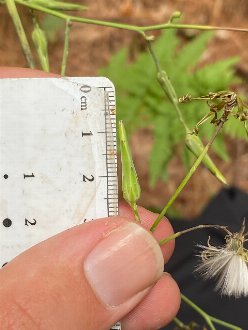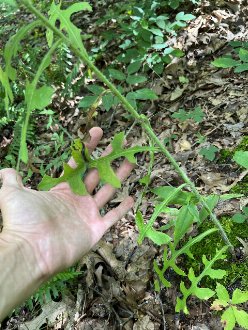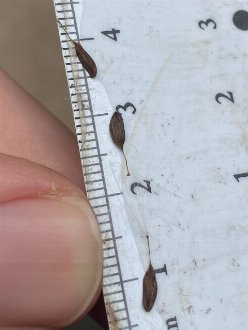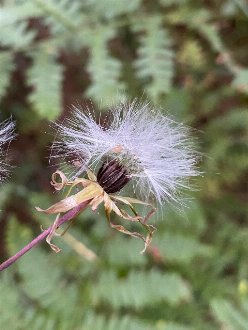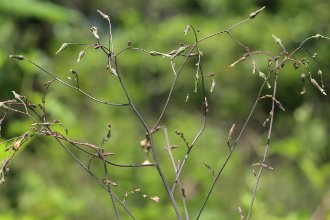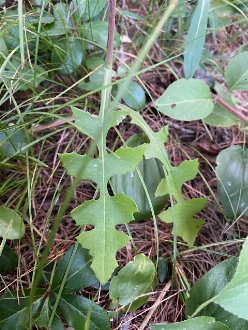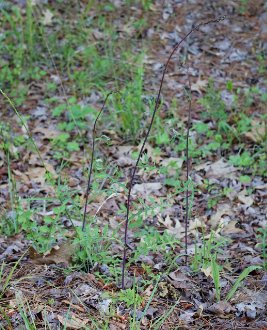

Red Wood Lettuce (Lactuca hirsuta Muhl. ex Nutt.)
Also known as hairy lettuce, red-flowered wild lettuce, tall hairy lettuce.
Some authorities recognize varieties of this and label the red-flowering one, which is most common, Lactuca hirsuta var. sanguinea. We follow POWO's treatment, which does not recognize any varieties or subspecies of this one.
↑Summary
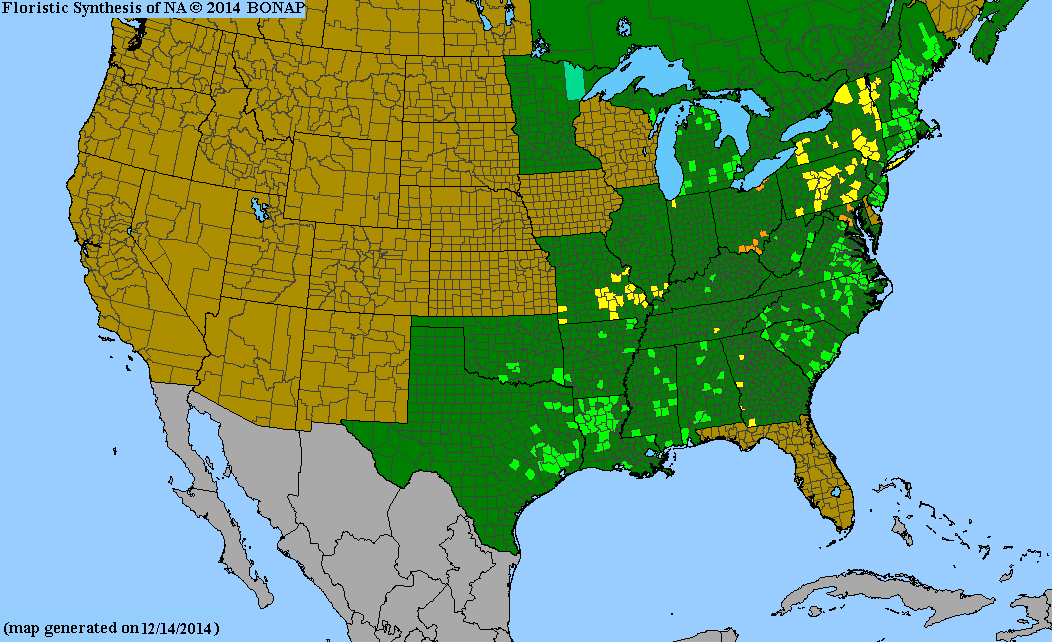
An uncommon to rare biennial native to the eastern US, favoring dry, sandy or rocky woodlands.
↑Range - Expand
| Legend | Color |
| Native | |
| Introduced or Not Present | |
| Native or Not Present | |
| Extirpated | |
| Native or Introduced |
This tentative map is based on our own research. It may have limited data on Canada and/or Mexico, and there is some subjectivity in our assignment of plants as introduced vs. expanded. Read more in this blog post.
Although this plant occurs somewhere in each of these regions, it may only occur in a small part of some or all of them.
↑Similar Plants
↑Habitat
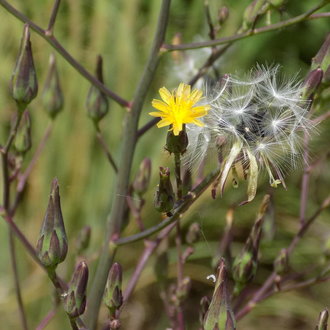
Lactuca hirsuta occurs on partly sunny sites on dry, acidic soils, usually on sandy or rocky soils. It is uncommon to rare in most of its range. Natural habitats include upland rocky woods, upland savannas, and woodland openings around rock outcroppings, particularly of sandstone. It is often associated with mixed pine-deciduous woods, but can also occur in pure deciduous woodlands. It is less likely in anthropogenic habitats but can occur in pastures, fields, and anthropogenic edges such as wooded roadsides in otherwise suitable habitat; it sometimes grows on exposed road beds when they are made of a suitable substrate.
Although the fire ecology of this species has not been thoroughly studied, NC Vascular Plants writes that it "seems to strongly favor fire for its survival", and it occurs in habitats that would have naturally burned. Its decline coincides with fire suppression following European colonization, so it is reasonable to conclude that it has been harmed by such fire suppression.
It is possible that there are unreported populations of this species, due to it being hard to identify and getting little attention. However, due to its precipitous decline, there are probably far more populations that have been extirpated without record of the loss.
↑Links & External Resources
• Lactuca hirsuta (hairy lettuce) | USDA PLANTS Database (About This Site)
• Lactuca hirsuta | Go Botany (About This Site)
• Lactuca hirsuta | Biota of North America Project (BONAP) (About This Site)
• Lactuca hirsuta | NatureServe Explorer (About This Site)
• Lactuca hirsuta | Flora of North America (About This Site)
• Lactuca hirsuta sanguinea (Red-flowered Wild Lettuce) | Illinois Wildflowers (About This Site)
• Lactuca hirsuta | Missouri Plants (About This Site)
• Hairy Lettuce | Maryland Biodiversity Project (About This Site)
• Lactuca hirsuta Muhl. ex Nutt. | Plants of the World Online (POWO) (About This Site)
• Lactuca hirsuta Muhl. ex Nutt. (Hairy Lettuce) | Digital Atlas of the Virginia Flora (About This Site)
↑Photo gallery