
Inflated Lobelia (Lobelia inflata) vs Pale Spiked Lobelia (Lobelia spicata)
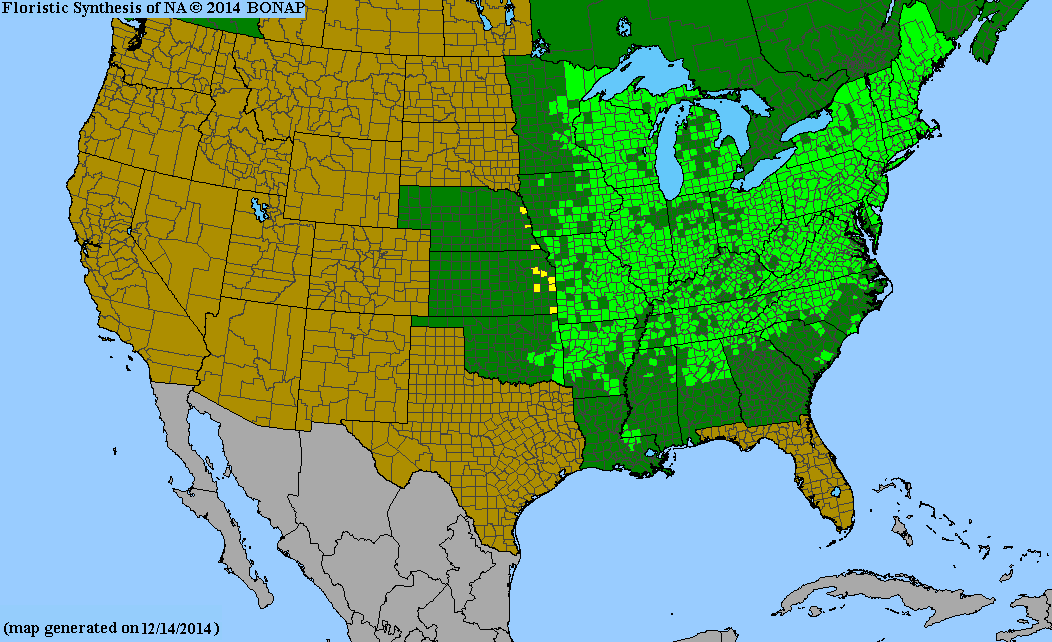
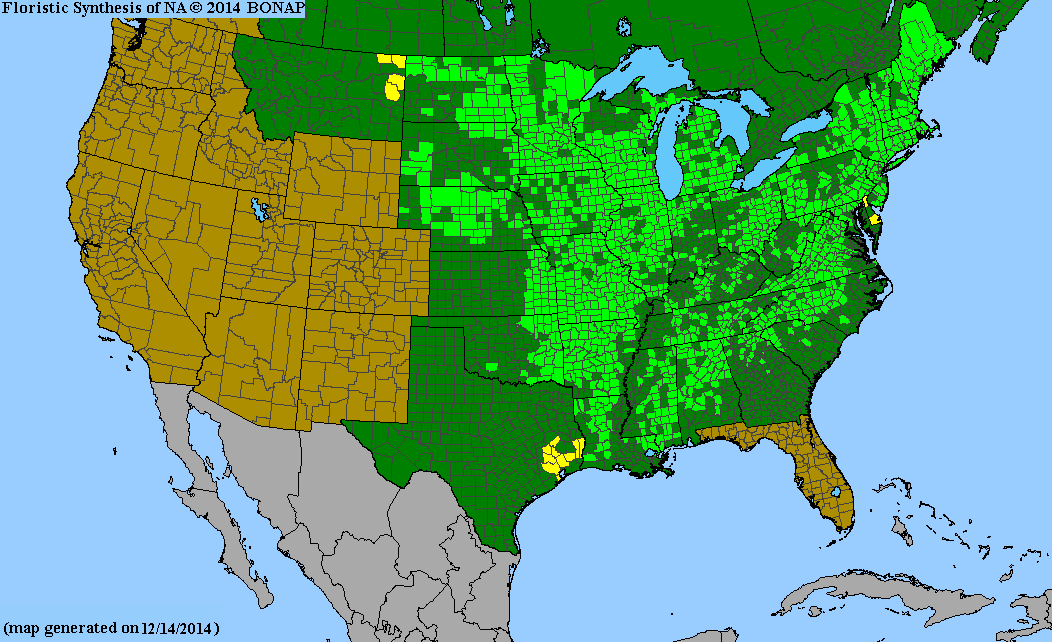
This guide is under construction and has not been published yet. It may have errors. When in doubt, double-check other sources for definitive ID.These two species are occasionally confused as both are similar heights and have small flowers with overlapping colors. They are easily distinguished by seed pods, bracts, leaves, and growth habit. L. inflata is an annual, ranges into shadier habitats, prefers more disturbance, and is more common in anthropogenic habitats. L. spicata ranges farther west and south, prefers more sunlight, and usually occurs in more intact wild habitats.
Inflated Lobelia (Lobelia inflata) | Pale Spiked Lobelia (Lobelia spicata) |
A usually-annual plant native to Eastern North America, an opportunistic generalist of disturbed, partly-shaded habitats. | A short-lived perennial native to sunny habitats in Eastern to Central North America. |
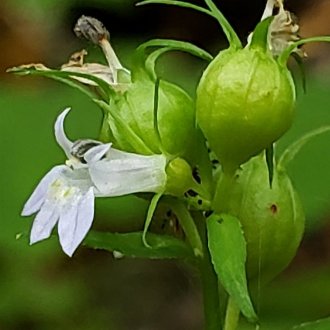 Mature seed capsules become inflated, even before they dry out. Photo © Jennifer Harris, CC BY 4.0. | 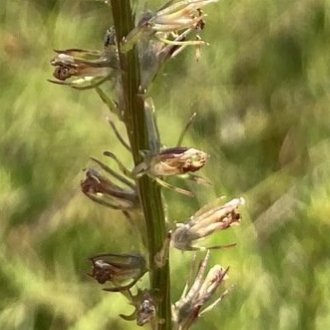 Mature seed capsules do not become inflated, and if anything look narrower than on most lobelias, even as they fully dry out. Photo © Shelby Lyn Sanders, CC BY 4.0. |
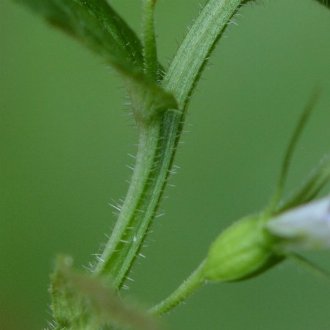 Stems are usually long-hirsute, covered in long, coarse, stiff hairs. Individual hairs are easier to see in an in-focus closeup photo, and space is visible between individual hairs. Even the upper stem is still hairy. Photo © Amber M. King, CC BY 4.0. | 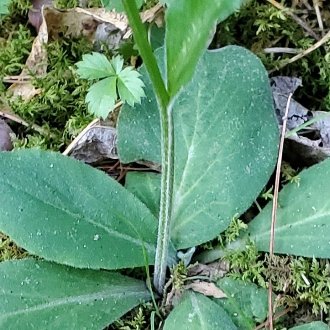 Upper stem is often less pubescent, but base of the stem is densely covered in fine, short hairs, often so small that they are hard to see even in an in-focus closeup photo, appearing only as a blurry "fuzzy" texture. Photo © jrsweet, CC BY 4.0. |
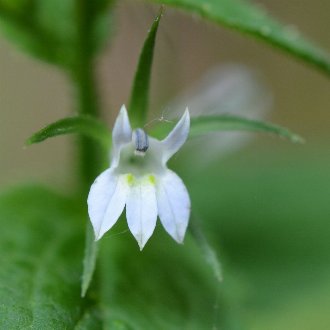 Bracts (leaf-like structures) enclosing lower flowers are conspicuous, usually much larger than the flowers themselves. Photo © Amber M. King, CC BY 4.0. | 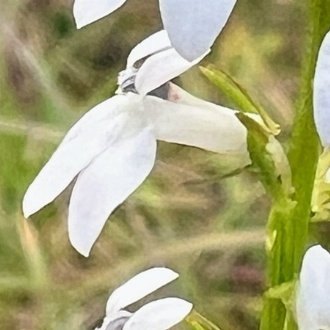 Bracts enclosing all flowers, including lower flowers, are much smaller, often even smaller than the flowers themselves. Photo © Ray Fisher, CC BY 4.0. |
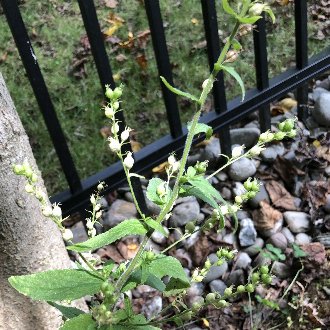 Although some plants may have a single spike of flowers and seedpods, the inflorescence on most plants is branched, usually with multiple branches originating from the upper leaf axils. Photo © Andrew Conboy, CC BY 4.0. | 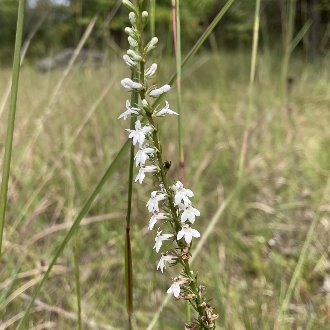 Inflorescence is almost always unbranched, with a single spike of flowers and seedpods. Photo © Stephen Hornbeck, CC BY 4.0. |
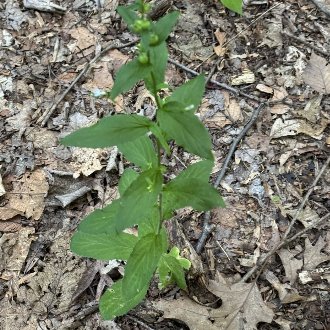 Leaf shape stays more consistent from the bottom to the top of the stem, and leaf shape is less variable from plant to plant and in different regions. Upper leaves stay similarly-wide to lower leaves, and remain more oval-shaped, with a more gradual taper from the widest point of the leaf. Photo © Sinéad Tuttle-Lerner, CC BY 4.0. | 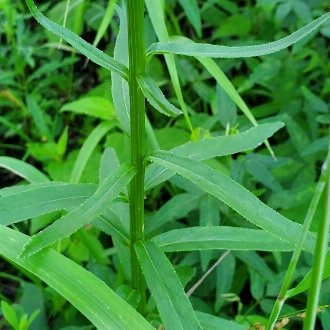 Leaf shape changes more from the bottom to the top of the stem, with upper leaves greatly reduced in size. Leaf shape varies more from plant to plant and regionally, with leaves on some plants becoming much narrower relative to their width, and upper leaves more oblong (having a more consistent width over most of their length.) Photo © Edie, CC BY 4.0. |
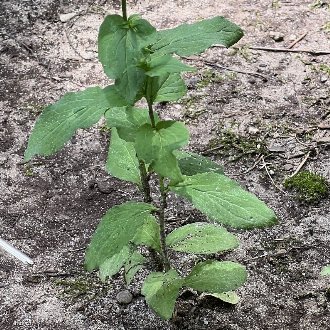 Basal leaves and lower leaves on the stem are usually smaller than leaves higher up on the stem. Basal leaves are usually withered by the time the stem is growing upright or wither shortly thereafter. Photo © Nathan Aaron, CC BY 4.0. | 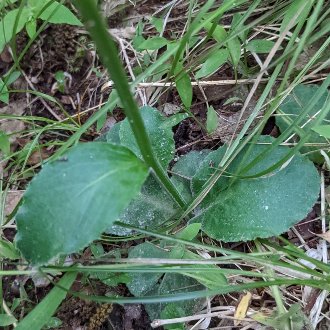 Basal leaves and lower leaves on the stem are usually the largest leaves on the plant. Basal leaves usually persist even as the stem is growing upright. Photo © RD, CC BY 4.0. |
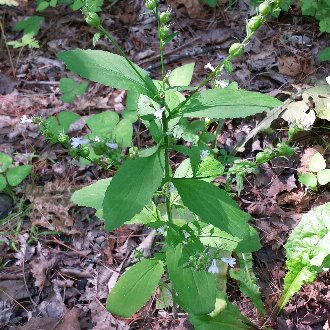 Plants tend to be stouter and more full, and are easier to photograph. Plants are usually branched, sometimes with leafy branches, and usually a branched inflorescence. Leaves extend much farther up the stem and upper leaves are broader. Photo © Tom Norton, CC BY 4.0. | 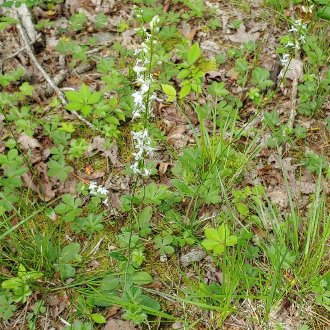 Plants have a leggy growth habit which is hard to photograph: entire plant is usually unbranched, leaves are limited to the lower half of the stem and upper leaves are greatly reduced. Photo © stinger, CC BY 4.0. |
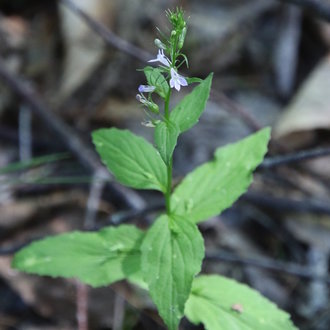 Prefers shadier habitats. More likely in anthropogenic habitats but also possible in natural habitats. Photo © er-birds, CC BY 4.0. | 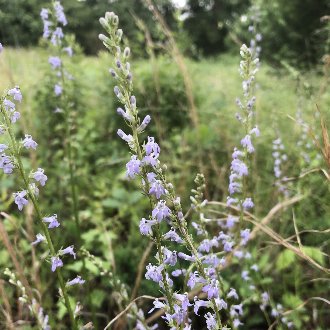 Prefers sunnier habitats. More likely in natural habitats but also possible in anthropogenic habitats. Photo © Scott Morris, CC BY 4.0. |
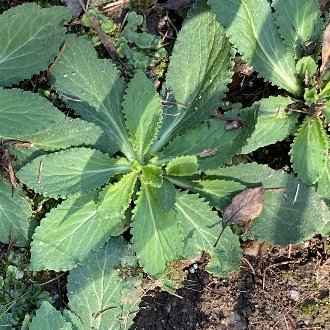 Basal rosettes usually have more numerous leaves. Leaf tips average slightly more pointed. Leaf margins are more likely to be wavy. Photo © Sandy Wolkenberg, CC BY 4.0. | 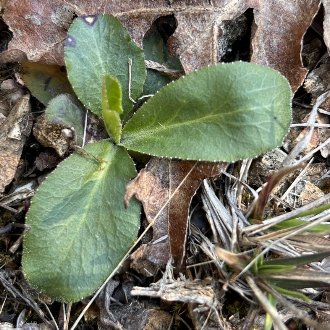 Basal rosettes usually have fewer leaves. Leaves average more blunt-tipped. Leaf margins less likely to be wavy, and are lined with small teeth dotted with glands, usually visible as tiny white dots. Photo © Nathan Aaron, CC BY 4.0. |
Additional Notes
Identification of any lobelias by basal rosettes alone is difficult. It is best to observe plants in your particular region through multiple growing seasons to identify which is which, and then follow each rosette as it matures in order to verify that you have identified each one correctly. Consider that although these species are easily distinguished from all other lobelias at the time of flowering, basal rosettes must also be checked against numerous other species, including great blue lobelia (Lobelia siphilitica), cardinal flower (Lobelia cardinalis), downy lobelia (Lobelia puberula), and others.References & External Resources
These short lists show only links helpful for ID. For a complete list of references and resources also covering other aspects of ecology, visit the links section of the full article on each plant, which is the first entry here.